Read the warning
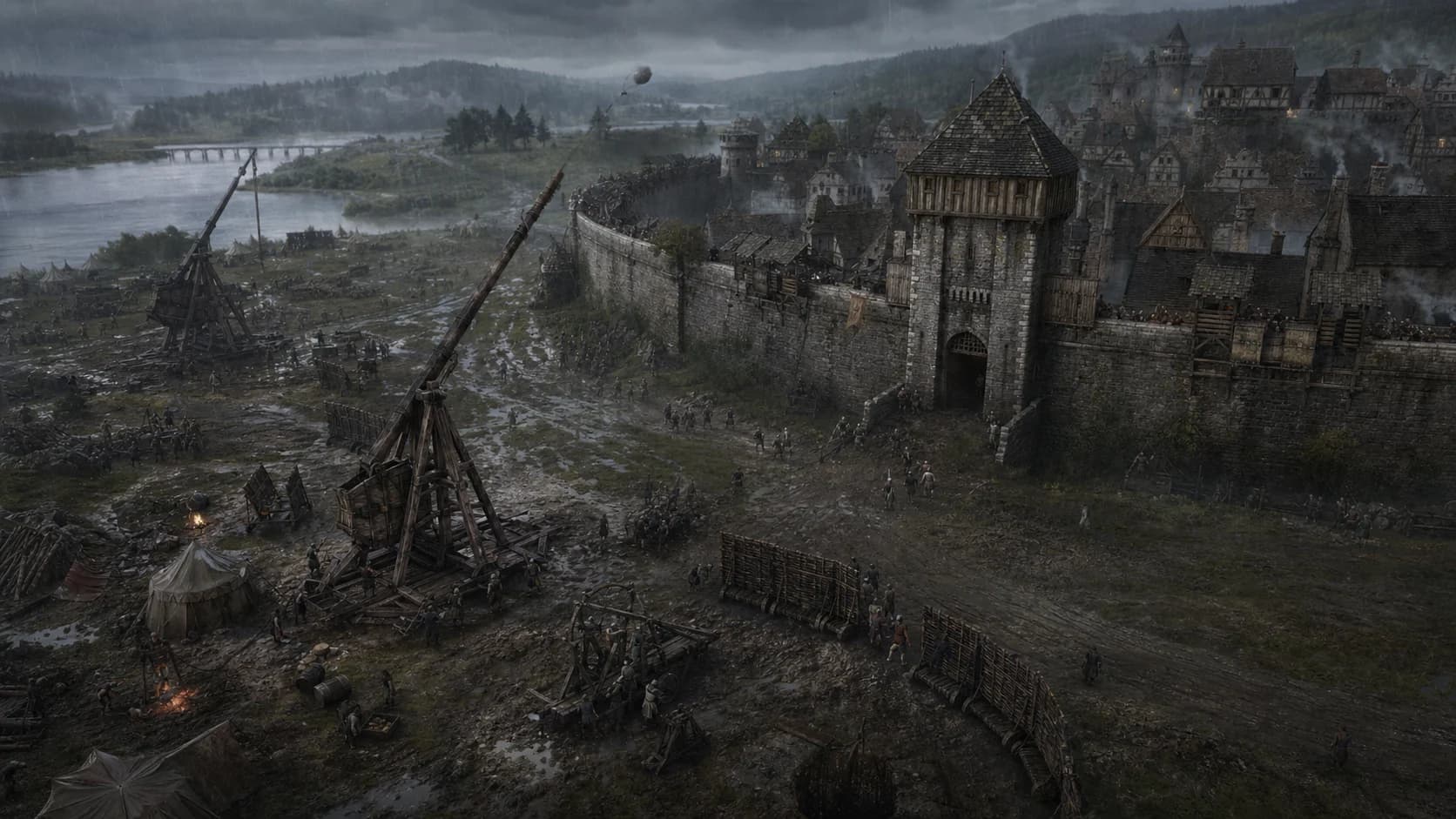
Attacks are announced. Their direction and the quality of your intelligence shape the preparation window. Workers leave ordinary tasks, reserves move, gates are staffed and likely lines of fire become real decisions.
Preparation wins more battles than frantic reaction. The strongest position is one that still allows people to retreat, repair and return to work.
Terrain becomes a defense
The best defenses are layered. Warning begins on the approaches, obstacles break momentum, ranged positions control exposed ground and reserves remain able to move where the line is weakest. A wall without access, depth or retreat space can become a trap.
Civilian life remains part of the plan. Grain, animals, workshops and water cannot all sit behind one perfect barrier. The settlement must decide what to shelter, what to move and what risk it can absorb.
A changing meaning of defense
A ditch and timber palisade solve different problems from a castle, a bastion or a layered sensor network. Each age changes what can be seen, what can be reached and what a wall is actually for.
Siege engines, powder, rail, motorisation and sensing do not simply increase power. They change distance, preparation time and the parts of the settlement that must remain functional during an attack.
After the breach
Survival is not the end of a wave. Fire, wounded people, damaged access and broken production compete for attention before the next warning comes. A heroic last stand that destroys the life behind it is a strategic failure.
Repair creates the next layer of history. The player decides whether to restore the old line, reinforce a new one or accept a scar as the price of making the settlement work again.