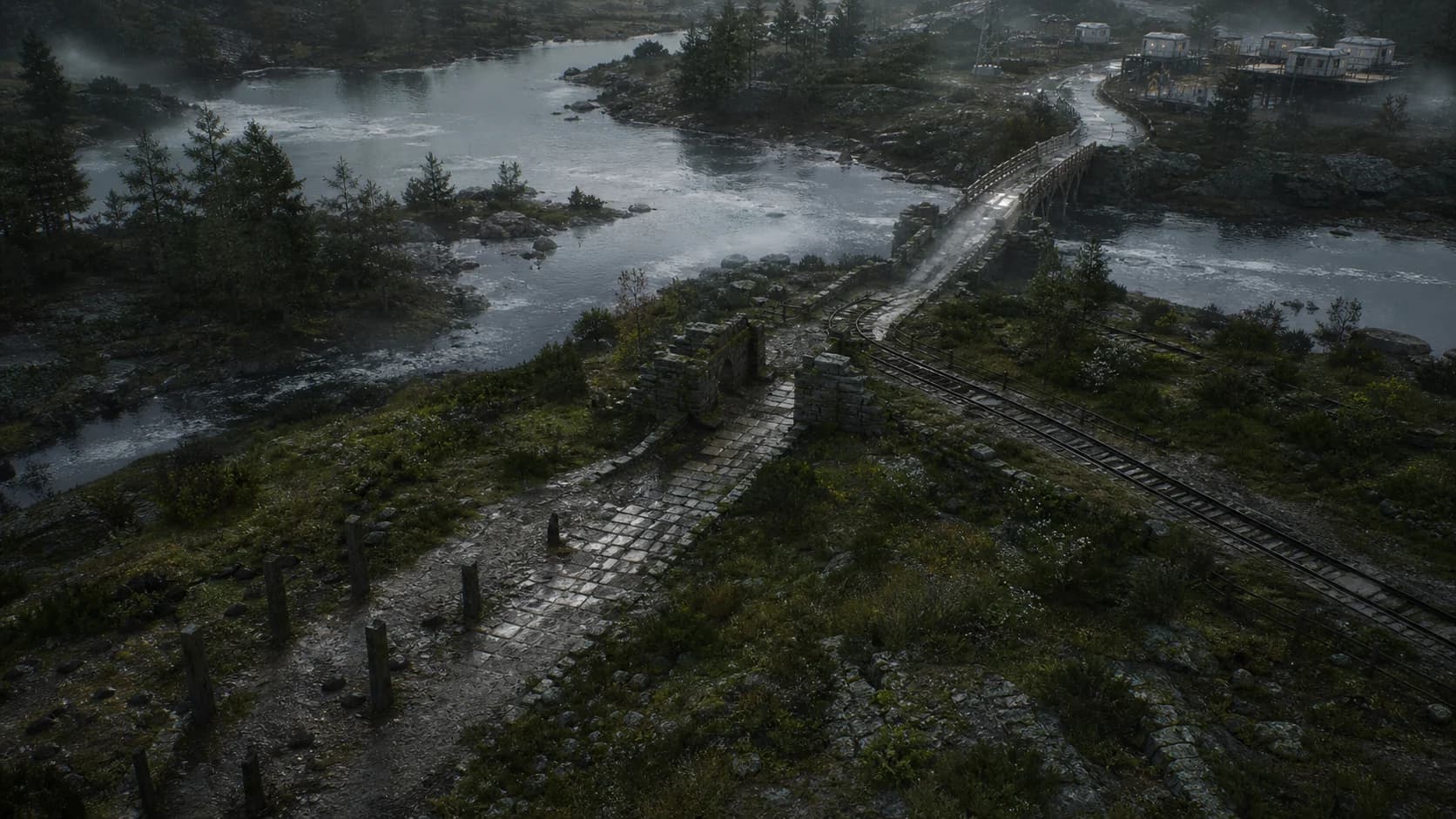
History as a change of rules
An age is more than an unlock tier. New materials change construction. New organisations change who can fight. New information systems change how early danger can be understood. New weapons change which inherited defenses still matter.
Progress expands capability, but it also creates systems the settlement must feed, repair and protect.
Transformation, not replacement
An age transition is visible work rather than an instant reskin. Construction interrupts familiar space, older routes meet new loads and some inherited structures prove more adaptable than others.
This makes progress personal. Two settlements reaching the same age can carry different walls, roads, ruins and institutions because their histories demanded different compromises.
Capability creates dependence
Greater reach and productivity create systems that must be supplied and protected. Roads invite faster movement in both directions. Industry concentrates labour and energy. Networks improve warning while introducing new points of failure.
EVO treats progress as a widening set of choices, not a ladder that makes the previous age meaningless. Old knowledge can remain valuable when the newest system is damaged or starved of what it needs.
A future with weight
The final age grows from recognisable present-day systems: repairable modules, resilient local energy, distributed sensing and autonomous movement under human authority. Nothing floats above consequence. Energy, weather, maintenance and human judgment stay visible.
The future settlement should feel more capable without feeling frictionless. Its strength comes from redundancy, repair and informed people—not from magical automation or technology without material cost.